

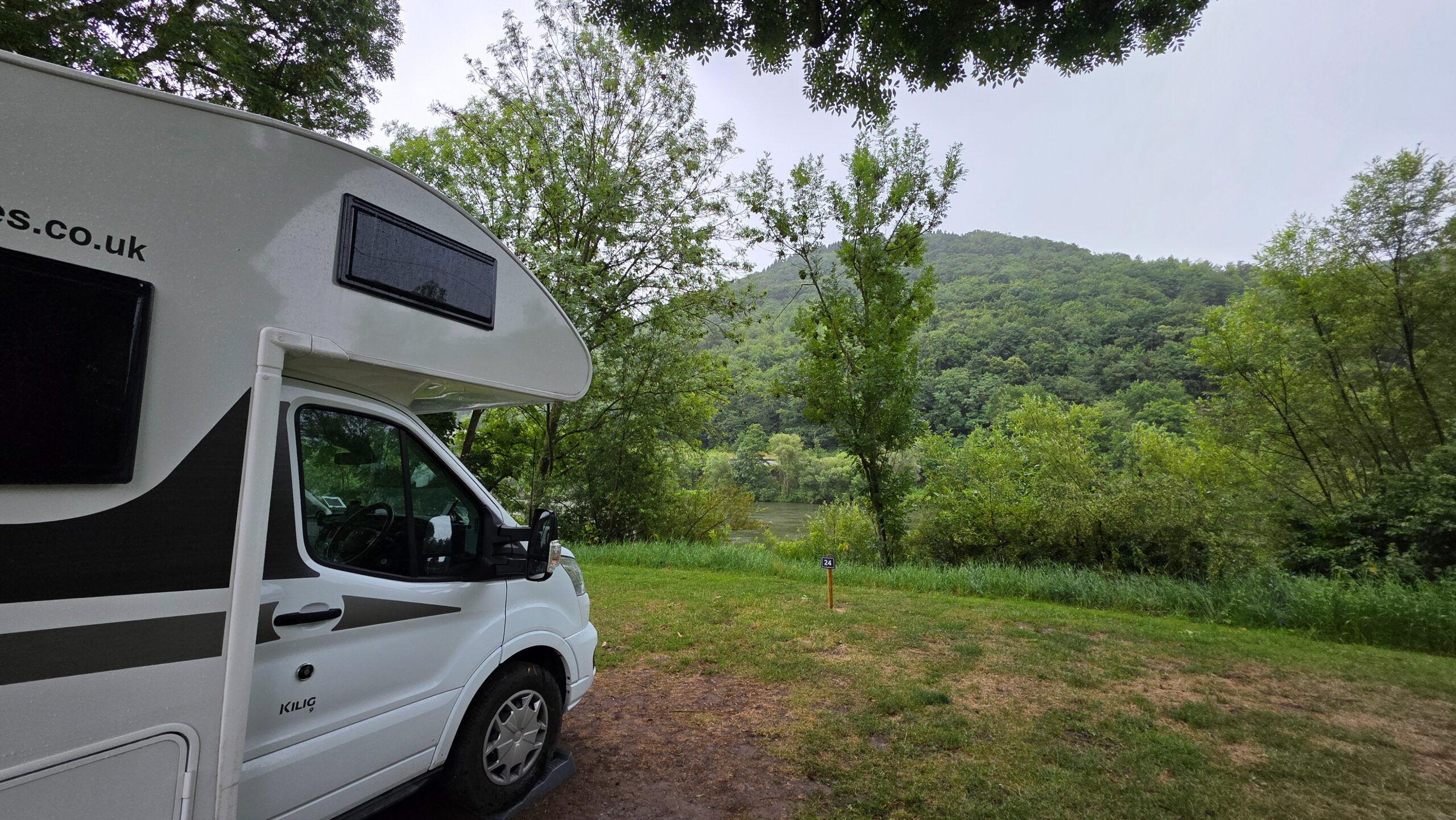
A family motorhome road trip around the UK is a holiday in which transport, accommodation, and everyday living space travel with you from one destination to the next. That freedom is the big attraction. One morning can begin beside a Cornish beach, and another can start below the fells of the Lake District, without repeatedly packing suitcases or checking into hotels.
The same freedom also makes planning important. A motorhome is larger than a car, children change the rhythm of a driving day, and an overnight stop needs more thought than simply finding an empty parking space.
A good plan therefore balances route length, vehicle choice, campsites, road rules, costs and family comfort while leaving enough flexibility for bad weather, tired passengers and unexpected discoveries.
How to Plan a Family Motorhome Road Trip Around the UK
The simplest way to plan a family motorhome trip is to build the holiday around a small number of worthwhile destinations rather than trying to cover as much mileage as possible. Start with the time available, decide what the family most wants to see, and then work backward into realistic driving days. Children usually enjoy a road trip more when they have time to explore, eat, walk, and play between journeys.
There are six main steps:
- Set the trip length. Decide how many full and partial days you actually have.
- Choose one broad region. A week in Wales or northern England is usually more relaxed than racing across Britain.
- Pick the must-see stops. Let each family member choose something.
- Check realistic driving times. Distance alone does not show how slow rural roads can be.
- Plan overnight stops. Match campsites or stopovers to the route.
- Keep spare time. Leave room for weather changes, traffic, and spontaneous detours.
How Should You Choose a Motorhome Road Trip Route?
The best family route connects a few high-priority destinations with short, manageable drives and reliable overnight options. Begin with two or three places that would genuinely justify the trip. Then look at the roads between them, not just the mileage shown on a map. A 70-mile journey through narrow country roads can feel much longer than 70 motorway miles.
Circular routes are often efficient because they reduce backtracking and create a natural flow from stop to stop. Before fixing the itinerary, check whether each destination suits the season, the children’s ages and the size of the vehicle.
Consider these route-planning factors:
- Total holiday length
- Children’s ages and interests
- Driving time, not just distance
- Campsite availability
- Road width and access
- Seasonal weather
- Attractions and outdoor activities
- One or two backup stops
How Far Should You Drive Each Day With Children?
Most family motorhome days should be short enough that the journey does not consume the holiday. There is no single perfect mileage figure because a toddler, a teenager and an adult passenger have very different tolerances, and road conditions vary widely across Britain.
Build regular toilet, food and movement breaks into every longer journey. Rural areas such as Cornwall, parts of Wales and the Scottish Highlands may involve narrow roads, steep sections and slower average speeds than the map suggests. Arriving before dark also makes pitching, connecting services and settling children much easier.
A useful approach is to make long driving days the exception. On other days, break the route with a beach, playground, short walk, viewpoint or family attraction so travel becomes part of the experience.
How Should You Choose and Book Family-Friendly Campsites?
The best family campsite fits both your motorhome and how your family actually travels. A basic rural pitch may be perfect for an independent vehicle, while families with younger children may value showers, laundry, play areas and an on-site shop far more. Location matters too. A cheap pitch can become inconvenient if every attraction requires another long drive.
During school holidays, book the important stops early, especially in popular coastal and national-park areas. Keep some flexibility elsewhere so the route does not feel locked to a timetable.
Check for:
- Electric hook-up and fresh water
- Waste disposal
- Toilets and showers
- Laundry facilities
- Play areas
- Shops or cafés
- Wi-Fi or mobile signal
- Public transport or walkable attractions
- Dog-friendly areas, if needed
What Type of Motorhome Is Best for a Family Road Trip?
The best family motorhome has enough safe traveling seats, usable beds, storage, and living space without being unnecessarily difficult to drive. Campervans are compact and easy to park, while coachbuilt and overcab motorhomes generally offer more room for families. Low-profile motorhomes trade some interior volume for a sleeker body, and larger layouts can provide fixed beds, separate washrooms or a rear garage.
Families who plan to tour regularly may compare hire costs with ownership and browse used motorhomes before deciding. When looking at motorhomes for sale, do not judge a vehicle by berth count alone. Four-berth motorhomes, six-berth motorhomes, automatic motorhomes, end-lounge layouts, island-bed layouts, and motorhomes with a garage all solve different practical problems.
The right choice is the layout that works when everyone is seated, sleeping, eating, and storing luggage, not simply the biggest vehicle available.
What Features Should a Family Motorhome Have?
A family motorhome should have safe passenger seating first, then a layout that remains practical once everyone is inside. Berths describe sleeping spaces, but they do not automatically tell you how many people can travel safely while the vehicle is moving. Check the registration details, fitted seats and restraint arrangements before assuming a four- or six-berth vehicle carries the same number of passengers.
Storage and everyday usability come next. Wet coats, shoes, food, bedding, and children’s equipment quickly take up more room than expected.
Useful family features include:
- Proper traveling seats and seat belts
- Easy-to-use beds
- Kitchen and fridge
- Toilet and washroom
- Heating
- Accessible storage
- Dining space
- Fresh-water capacity
- Charging points
- Outdoor or awning space
Where Should Families Go on a UK Motorhome Road Trip?
The best UK destination is the region that matches the family’s interests and can be explored without spending every day on the road. Britain is compact on a map, but trying to combine Cornwall, Wales, the Lake District and Scotland in one short holiday creates more driving than sightseeing.
For a one-week trip, concentrate on one broad area. For two weeks, link neighboring regions with one or two longer travel days. Before choosing the route, consider weather, seasonal crowds, and the types of activities your children enjoy.
Strong options include:
- Cornwall and Devon: beaches, coastal walks and seaside towns
- Lake District: easy walks, lakes and outdoor activities
- Yorkshire: countryside, historic towns and family attractions
- Wales: castles, mountains, beaches and scenic drives
- Scotland: lochs, Highlands and longer touring routes
- Northern Ireland: coastal scenery and relatively compact itineraries
How Can You Keep Children Comfortable and Entertained on the Road?
Children are more comfortable on a motorhome trip when you break driving into predictable, interesting stages. The goal is not to fill every minute with entertainment. It is to prevent long periods in the vehicle from becoming the main memory of the holiday.
Give children some ownership of the route by letting them choose a beach, castle, wildlife park or lunch stop. Keep snacks and drinks easy to reach, but still plan proper breaks where everyone can stretch and use facilities.
Useful road-trip entertainment includes:
- Audiobooks and playlists
- Travel games
- Activity books
- Downloaded films or programs
- A few small toys
- Comfortable layers
- Regular playground or walking stops
What UK Driving Rules Should Motorhome Travelers Know?
Motorhome drivers should check license entitlement, vehicle weight, speed limits, dimensions, and local environmental restrictions before setting off. Maximum authorized mass, or MAM, is the vehicle’s weight plus the maximum load it can carry. In Great Britain, a motorhome between 3.5 and 7.5 tonnes MAM requires category C1 entitlement, while a vehicle over 7.5 tonnes requires category C. Northern Ireland can have different licence rules.
Speed limits can also change with vehicle weight. A motorhome over 3.05 tonnes maximum unladen weight is generally limited to 50 mph on single carriageways and 60 mph on dual carriageways, although the motorway limit remains 70 mph.
Before traveling, check:
- Driving license category
- MAM, payload and axle limits
- Vehicle height and width
- Road-specific speed limits
- Low bridges and narrow routes
- Seat-belt requirements
- Parking restrictions
- Clean Air Zones and Low Emission Zones
Several English cities operate Clean Air Zones, and drivers should check their registration before entering because charges depend on the vehicle and emissions standard.
Can You Sleep Anywhere in a Motorhome in the UK?
No, traveling in a motorhome does not create a general right to park and sleep anywhere overnight. Whether an overnight stay is allowed depends on land ownership, local traffic rules, car-park conditions, signage and any restrictions imposed by the authority or landowner.
The safest options are established campsites, dedicated motorhome stopovers and private land where permission has been given. Check public car parks and roadside locations individually rather than treating them as free camping areas.
The distinction is especially important in Scotland. Scottish access rights cover responsible outdoor recreation and lightweight camping in many places, but they do not include access with motor vehicles.
Common overnight options are:
- Campsites
- Dedicated motorhome stopovers
- Private land with permission
- Public car parks where overnight stays are specifically allowed
- Other designated parking areas with suitable rules
What Should You Pack for a Family Motorhome Holiday?
A family should pack for safe travel, sleeping, cooking and outdoor weather while keeping the motorhome’s payload in mind. Payload is not spare cupboard space. It is the legal carrying capacity left for passengers, water, food, clothing, bikes, equipment and everything else added to the vehicle.
Pack in categories and avoid duplicating items that already belong to the motorhome. British weather also rewards flexible clothing. Waterproof layers, spare shoes and warm bedding are often more useful than extra outfits.
A practical checklist includes:
- Documents: licenses, insurance, breakdown details and bookings
- Motorhome gear: hook-up cable, levelling equipment and water equipment
- Kitchen: basic cookware, food and reusable bottles
- Sleeping: bedding, blankets and nightwear
- Children: games, favorite toys and weatherproof clothes
- Outdoor gear: walking shoes, jackets and folding chairs
- Safety: first-aid kit, torch and emergency supplies
How Much Does a Family Motorhome Road Trip Around the UK Cost?
A family motorhome trip can range from a relatively economical self-catered holiday to an expensive peak-season tour, depending mainly on the vehicle and the distance traveled. For 2026 planning, family-size campervan and motorhome hire listings commonly appear from roughly £75 to £180 per day, although premium models can cost more. Quirky Campers reports typical starting prices around £90 to £100 per night.
Campsites are another major variable. Current UK listings show many touring pitches around £20 to £50 per night, with location, electricity and facilities influencing the rate.
Six main factors shape the budget:
- Hire or ownership: usually the highest fixed cost.
- Fuel: rises quickly on long routes.
- Campsites: varies by season and facilities
- Food: self-catering can reduce spending
- Activities: paid attractions can add up for families
- Parking and zone charges: depend on the route and vehicle
Conclusion
A successful family motorhome road trip is not the one that covers the most miles. It is the one that gives everyone enough time to enjoy where they have arrived. A manageable route, suitable vehicle, sensible overnight stops and realistic driving days make the biggest difference.
Build flexibility into the plan. Weather changes, children get tired, and the unplanned beach or village often becomes the best stop of the trip.
Plan the important parts, then leave enough space for the road trip to feel like a road trip.